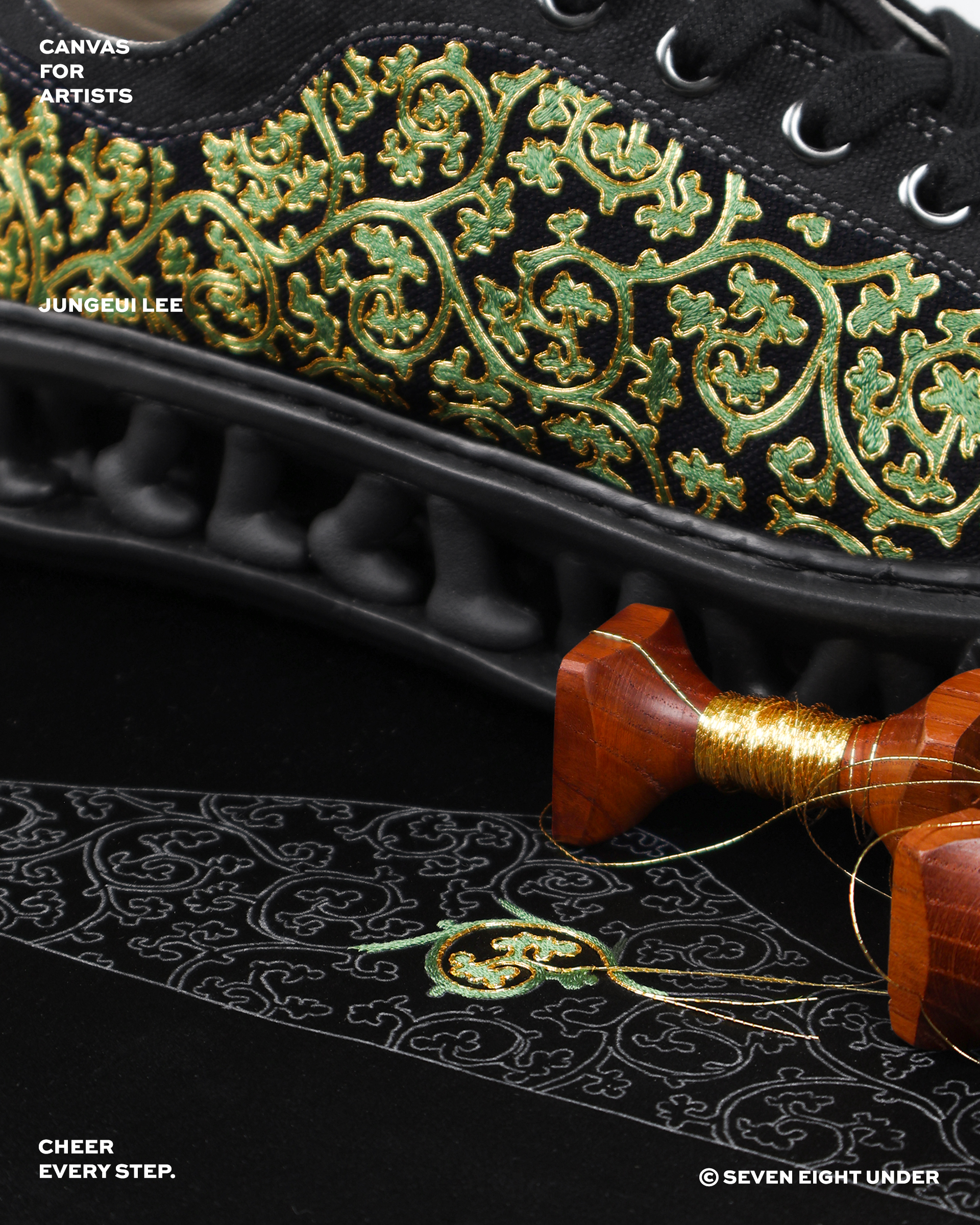
"Rising with Every Auspicious Step", "Life Unfolds, Time Walks On"
Q. Could you briefly introduce yourself?
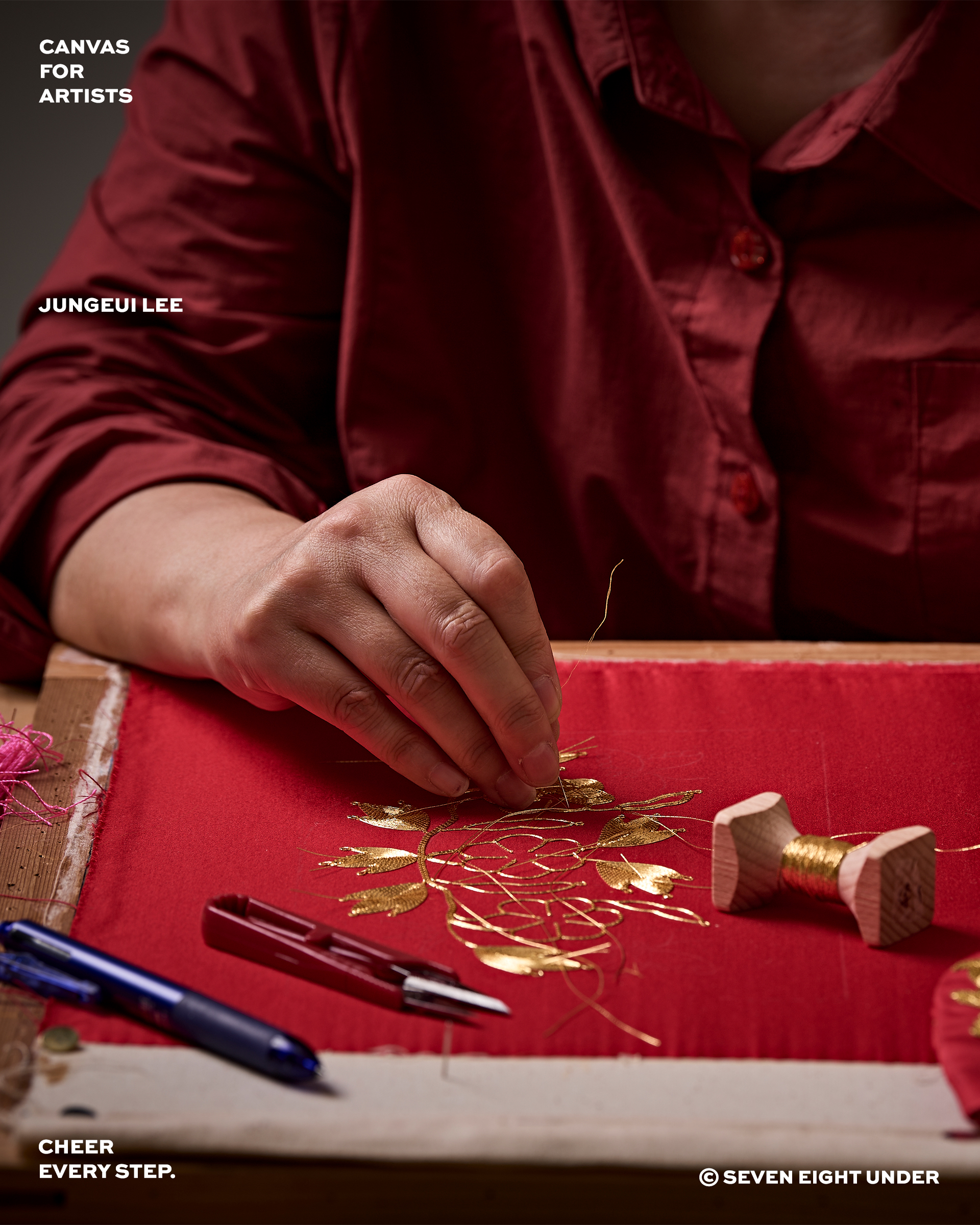
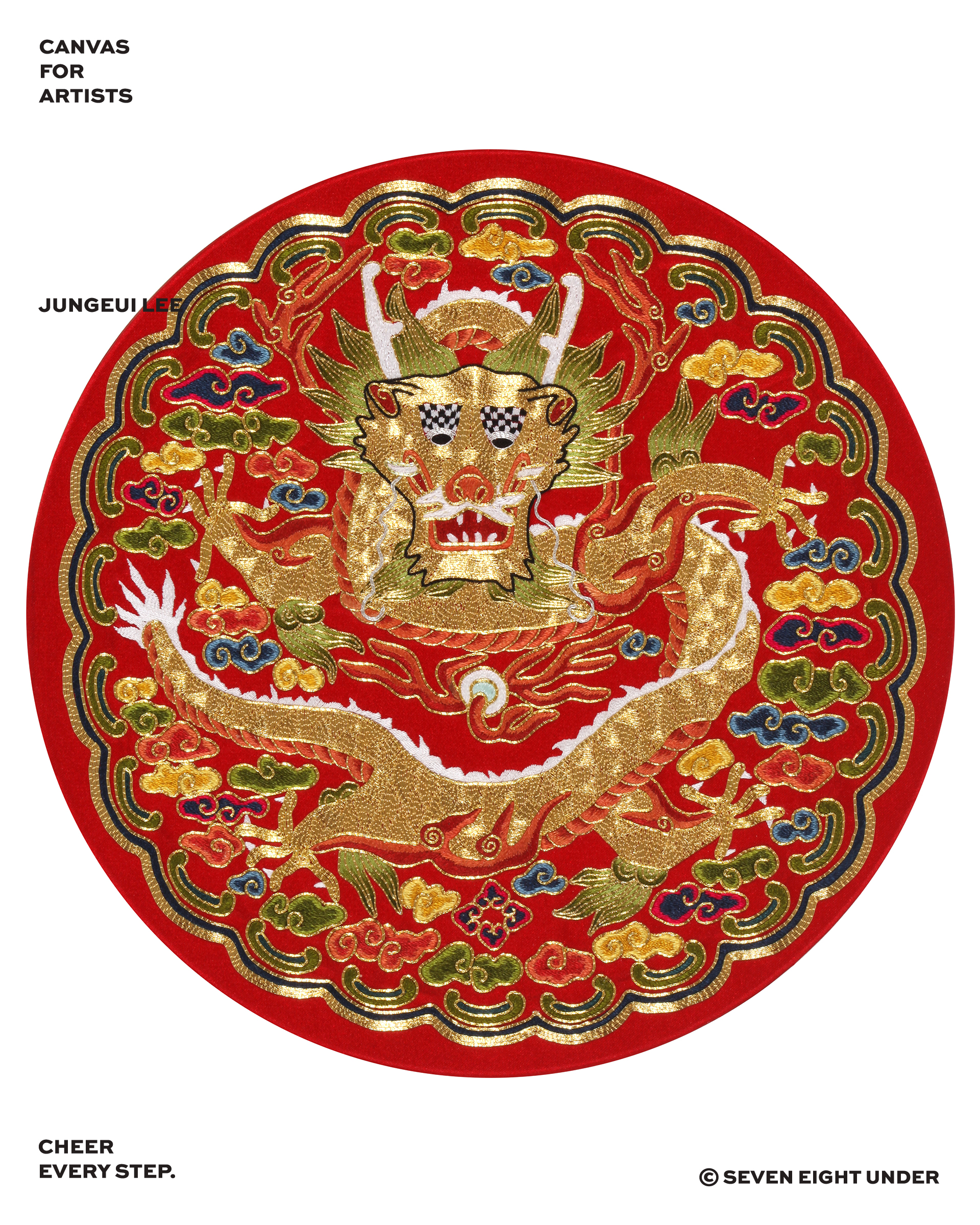
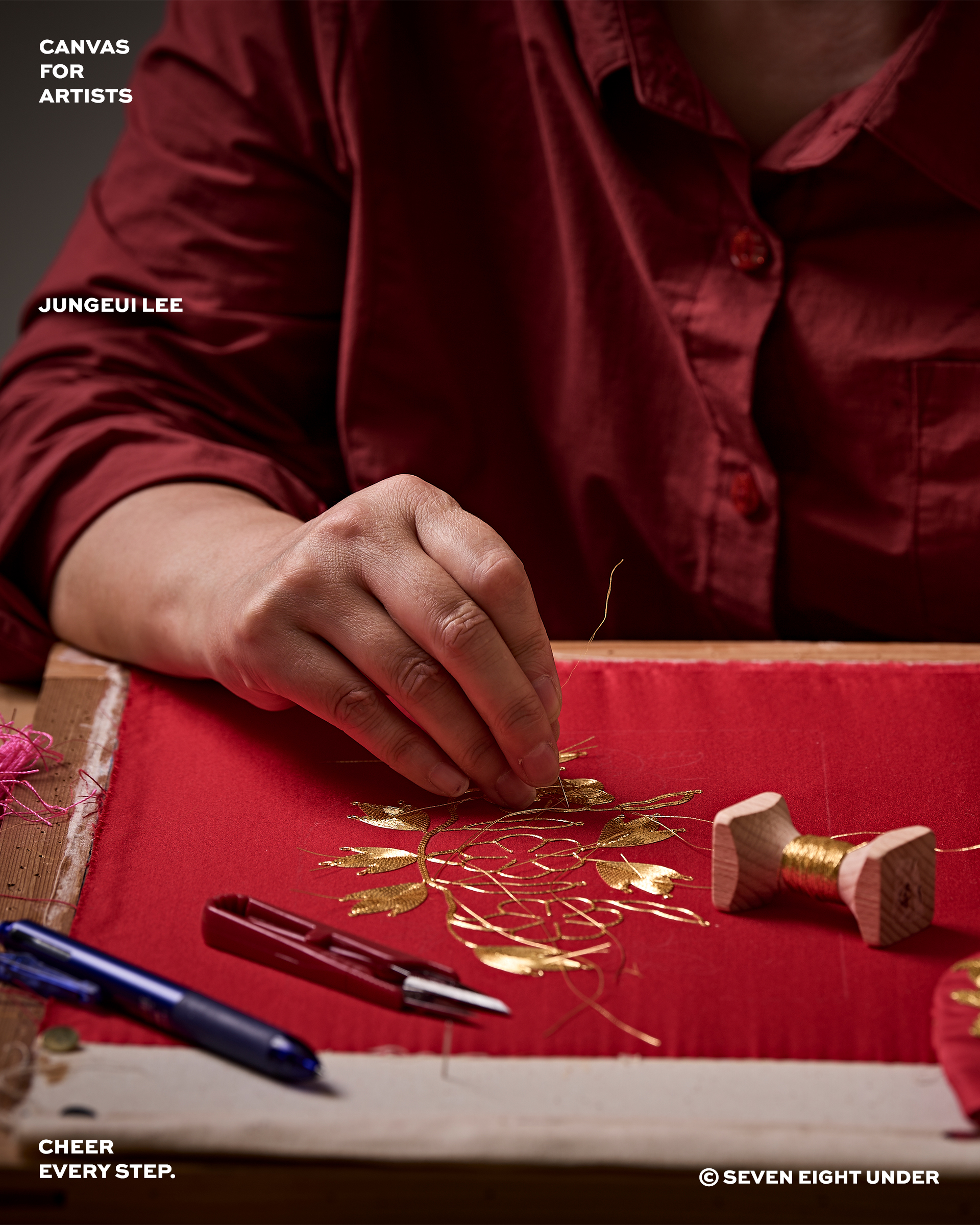
Hello, I’m Jungeui Lee, a certified practitioner of Korea’s National Intangible Heritage in embroidery. Drawn to the beauty and history of traditional embroidery, I studied the field through both bachelor’s and master’s programs. The focus required by every stitch is demanding, but the joy of the process led me to become a full-time artist. Today, I work across artifact reproduction, original pieces, garments, and fashion collaborations, expanding embroidery while staying rooted in tradition.
Q. What first led you to traditional embroidery?
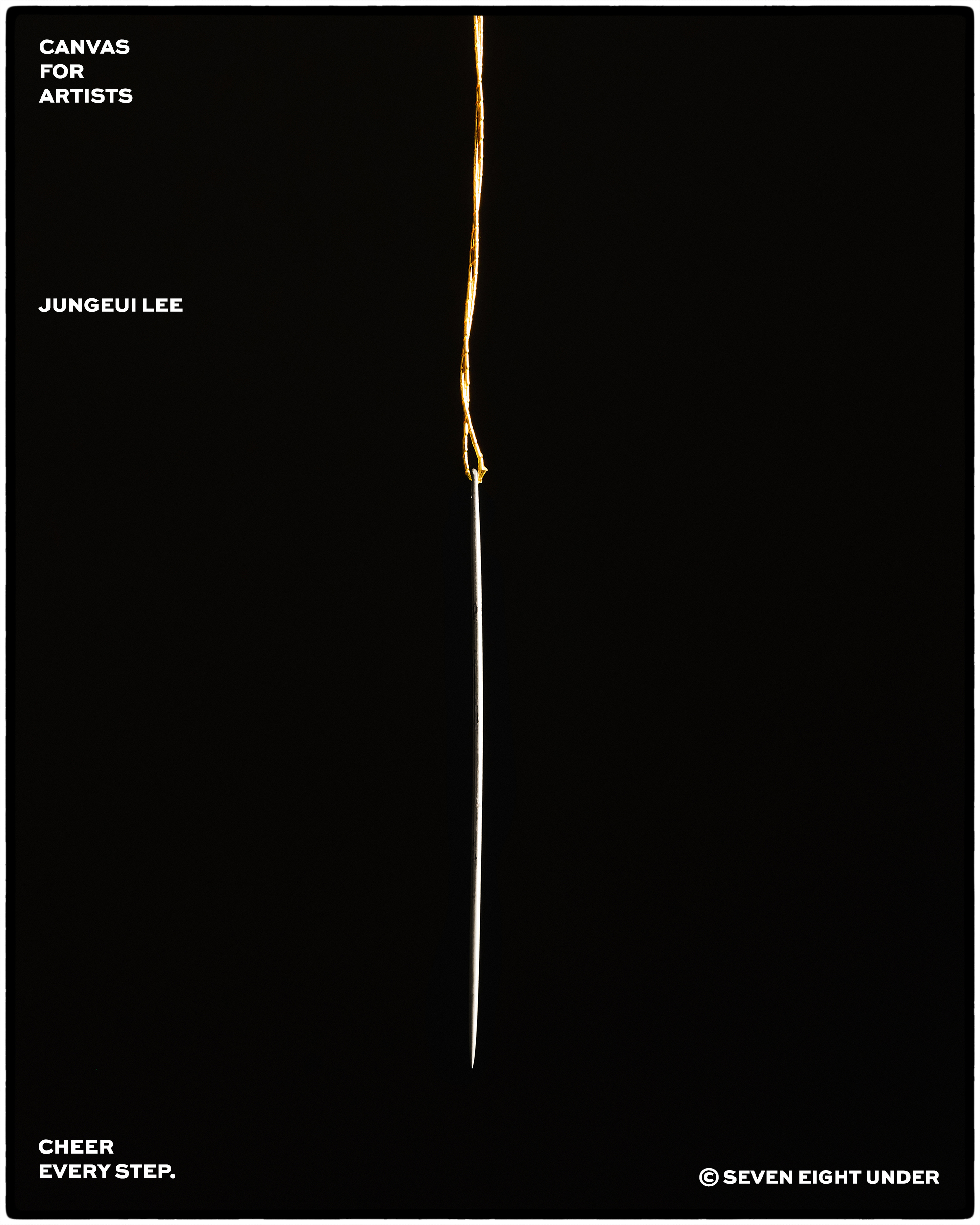
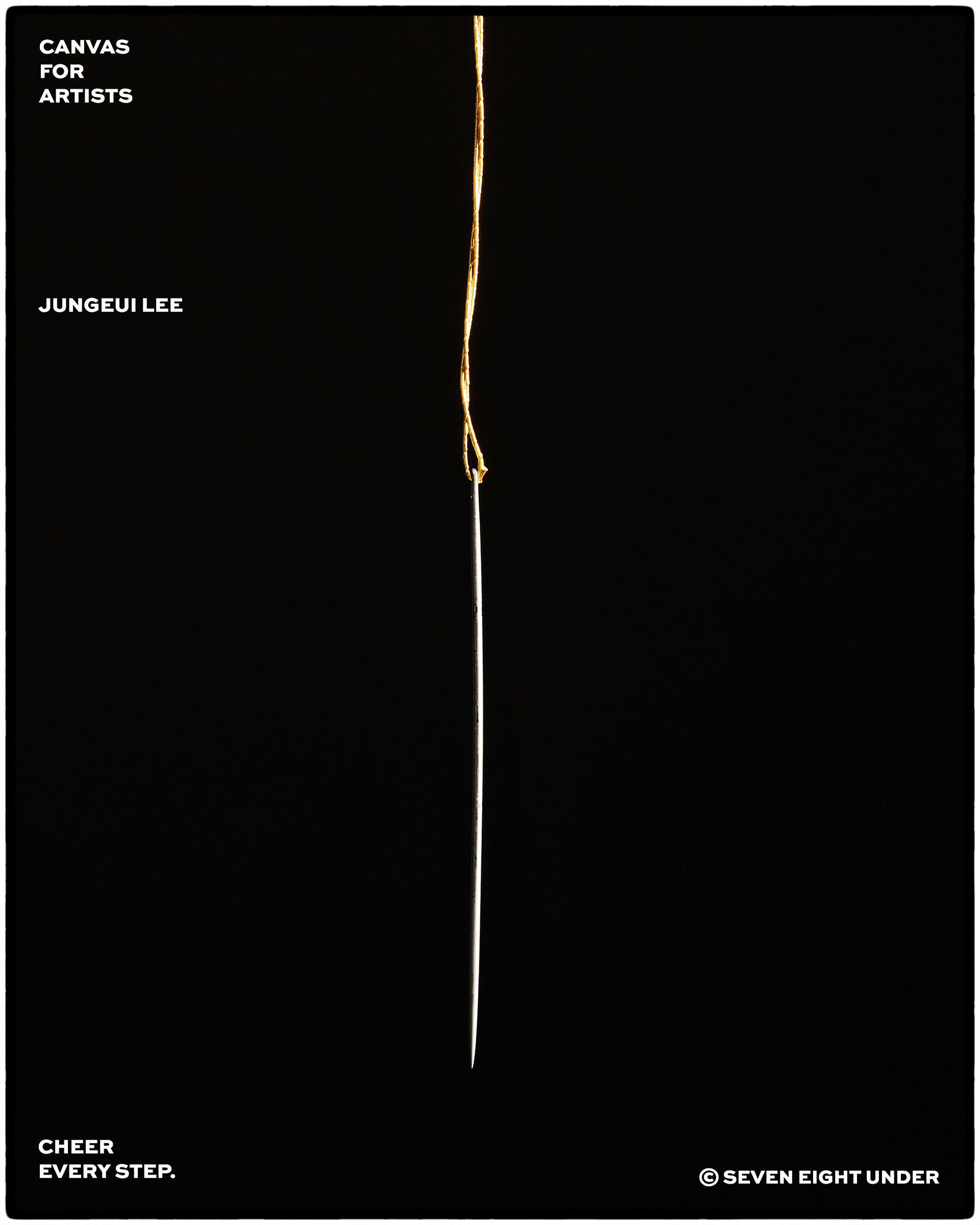
I grew up watching my mother embroider. Later, sewing and gyubang craft—traditional Korean needlework—led me to pursue embroidery as my lifelong path. “One stitch at a time” means more than technical precision. It holds the weight of time, the warmth of the hand, and heartfelt care that no machine can replace. That beauty has kept me on this path ever since.
Q. You have described embroidery as a “total art form.” Why do you see it that way?
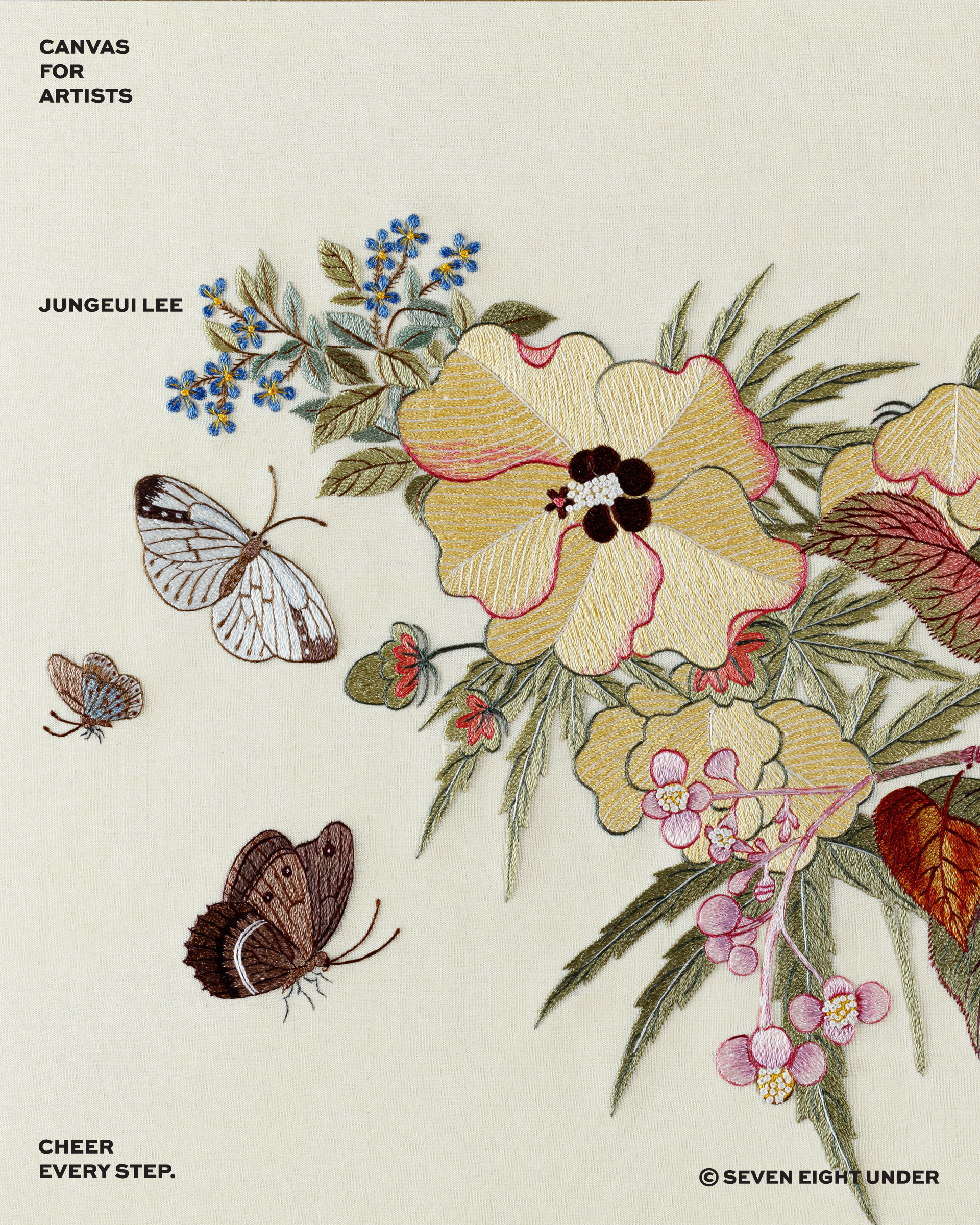
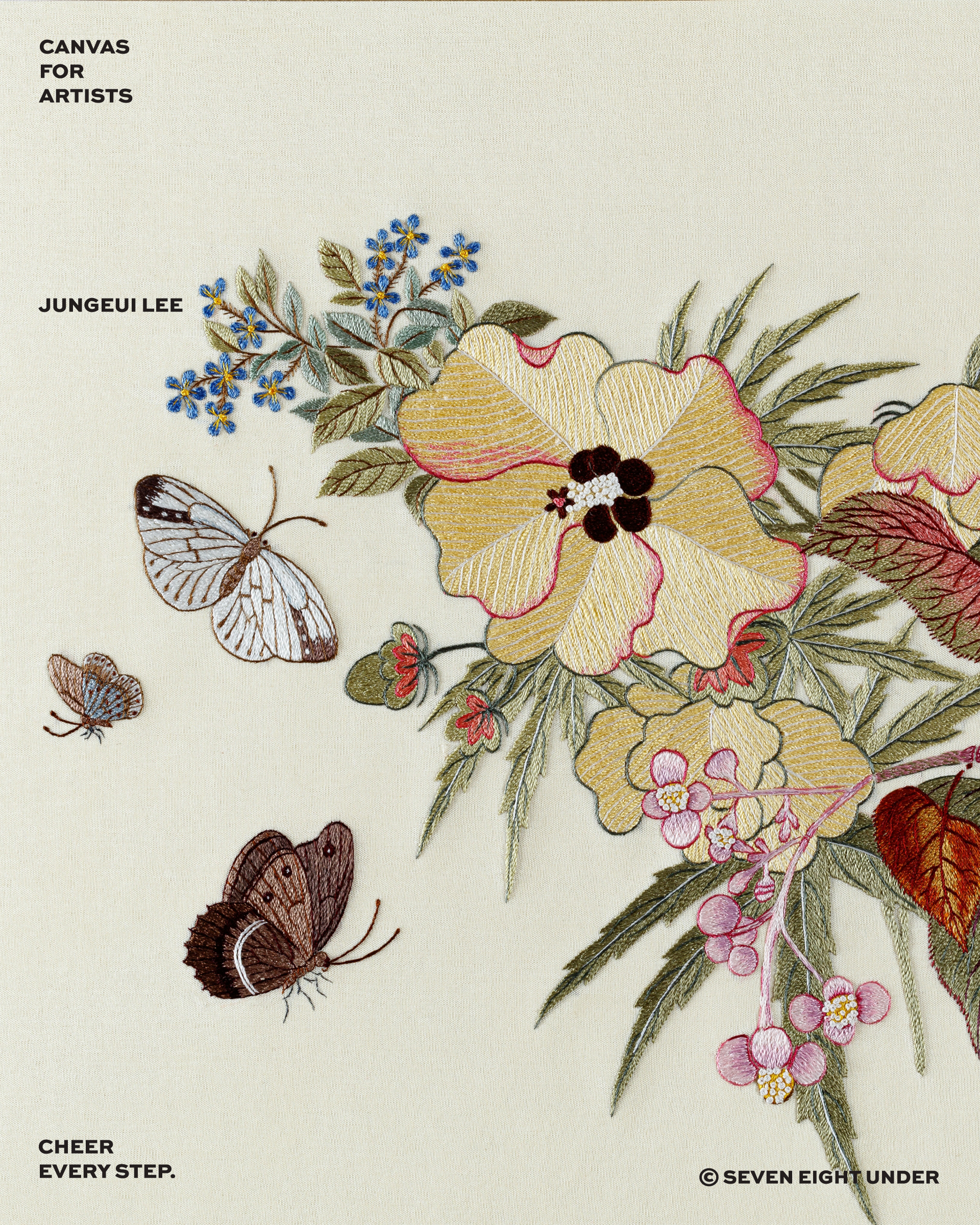
Embroidery is not simply about filling a design with thread. It requires careful thought about color, brightness, saturation, form, texture, composition, and visual balance. Even one flower petal may contain several layered colors, and its impression changes with every choice. Since embroidery combines technique with artistic judgment, I consider it a total art form.
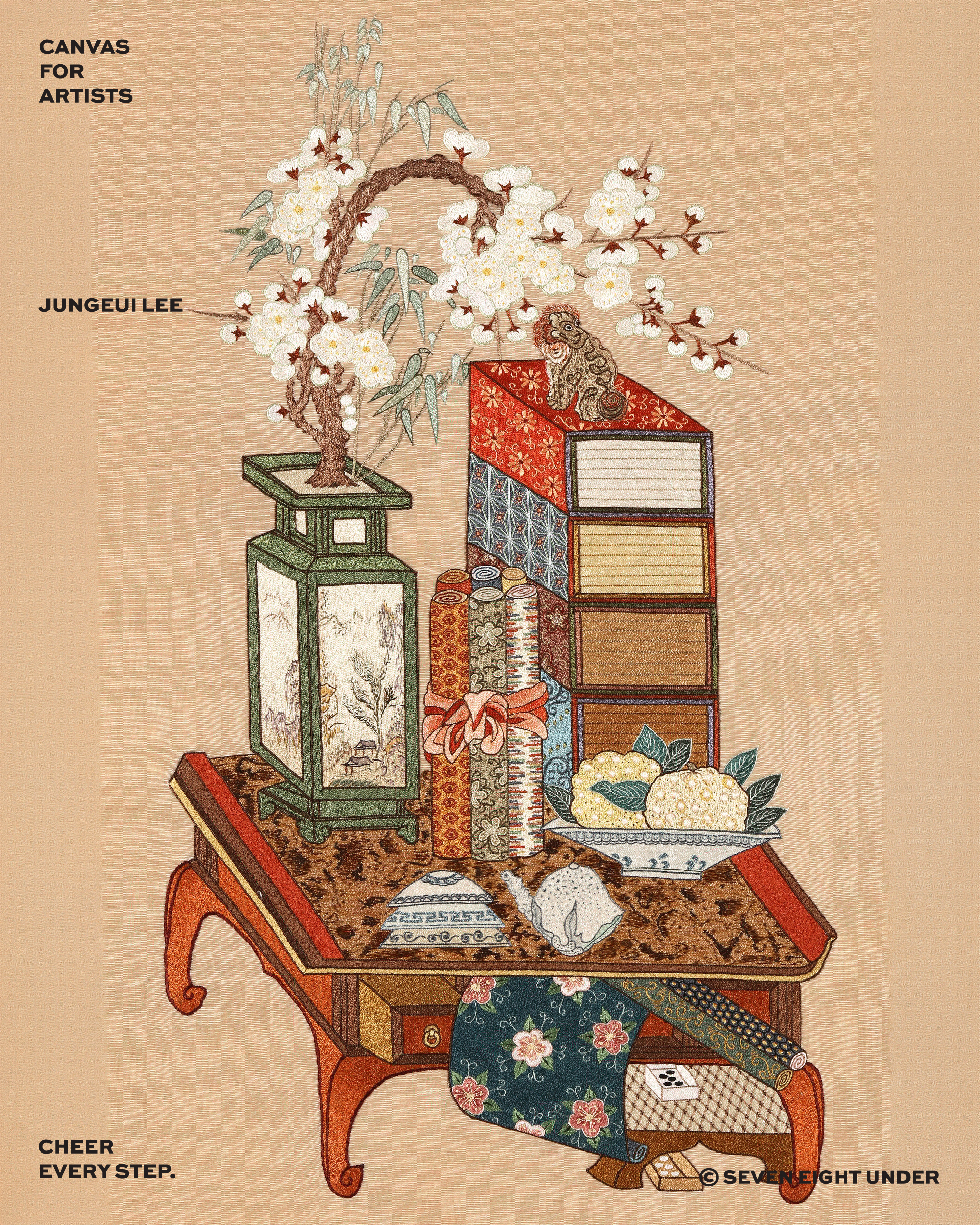
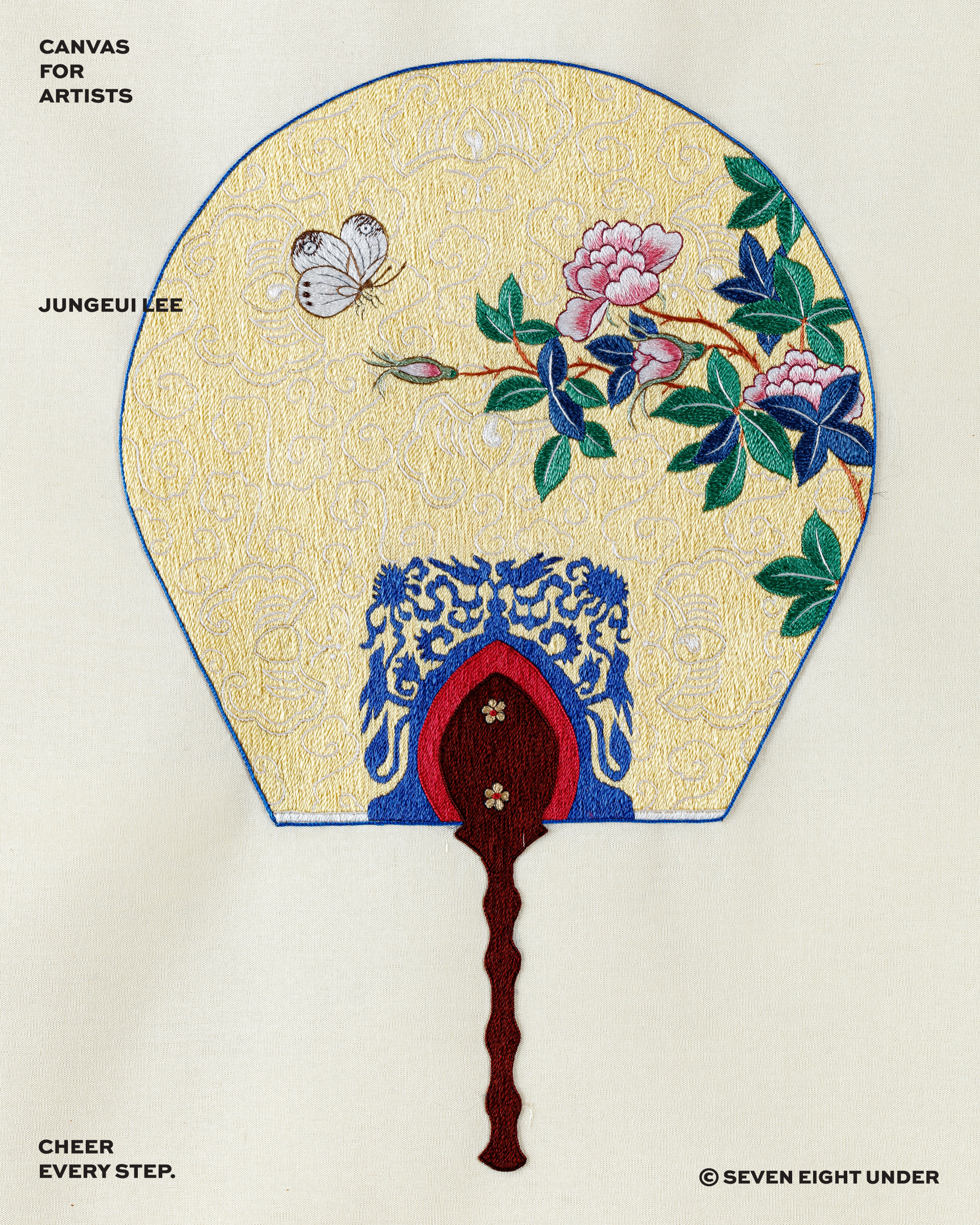
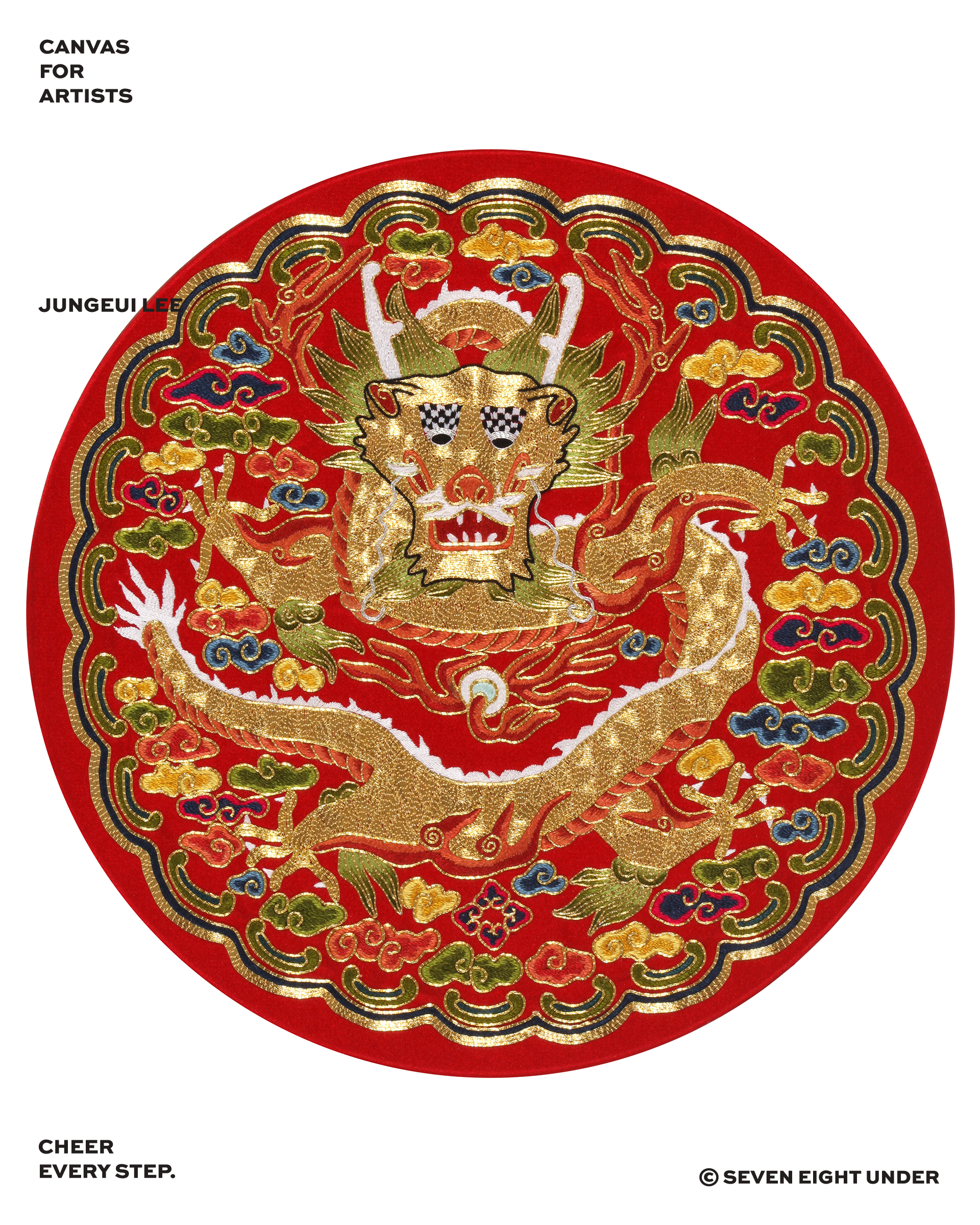
Q. Your work features chaekgeori, royal motifs, dragons, clouds, butterflies, and fans. How do you choose your subjects?
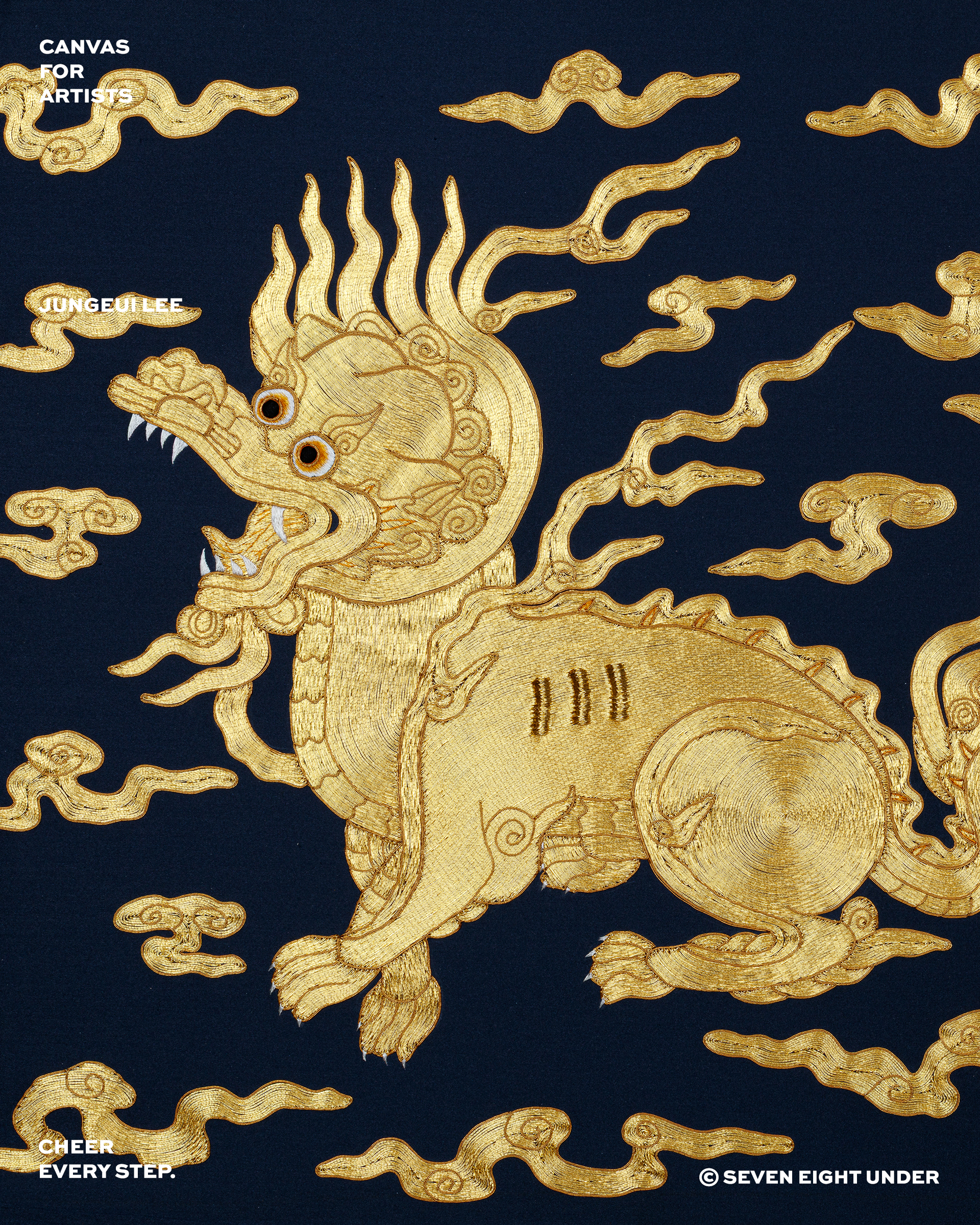
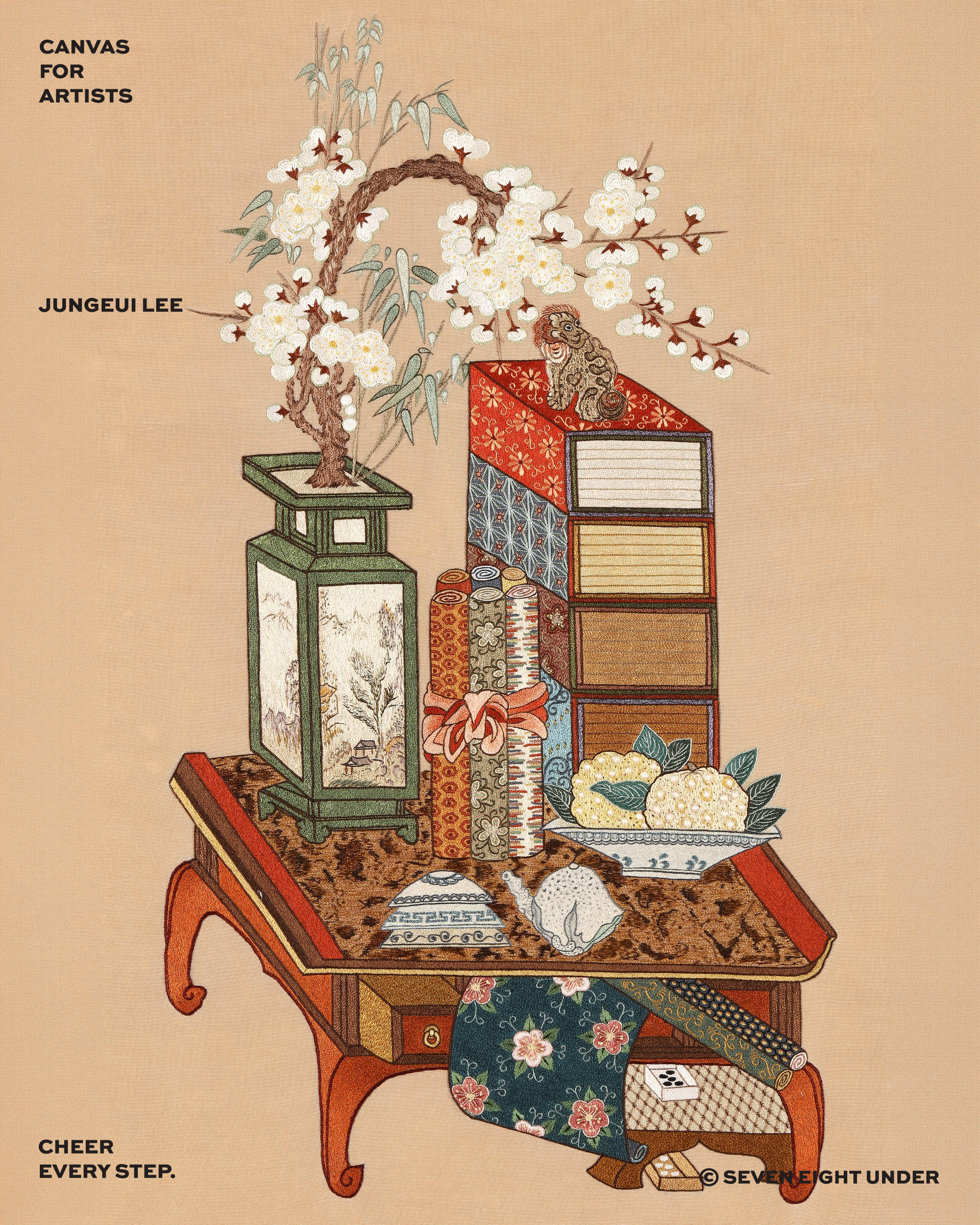
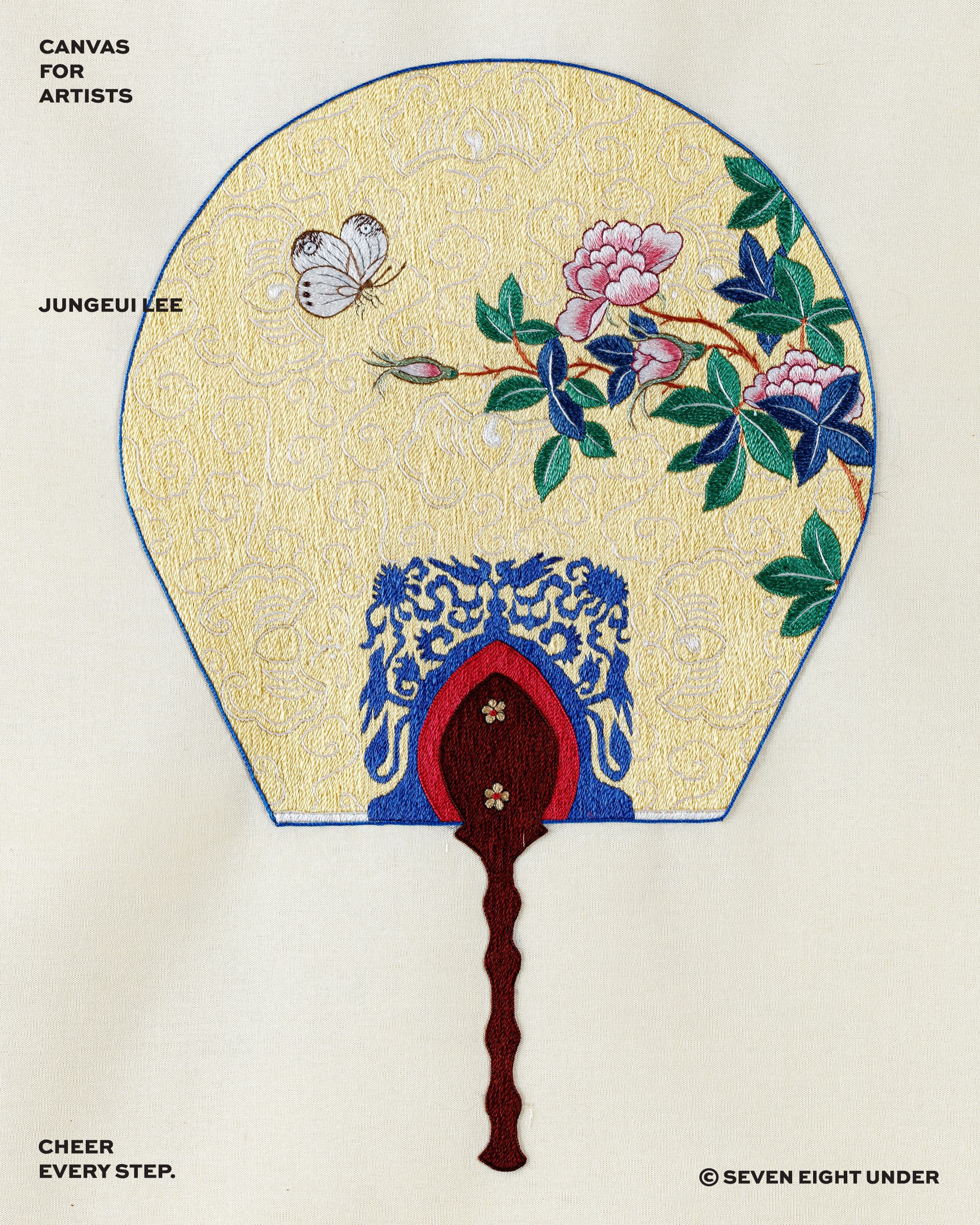
Artifact reproduction is a foundation of my work, but I also draw from royal decorative paintings, traditional paintings, and folk art. After studying historical references, I reinterpret the colors and compositions through my own sensibility. I am especially drawn to auspicious motifs representing protection, growth, prosperity, and good fortune.
Q. How do you balance faithful reproduction with your own interpretation?
Painting and embroidery can look very different. Even when the original color seems to match the silk thread, it may change completely once stitched. I adjust the brightness, saturation, and palette while respecting the original form and spirit. Since a needle can create details even finer than a brush, each stitch naturally becomes part of my interpretation.
Q. Which works are you most attached to?
The works closest to me are the 2019 Eight-Panel Embroidered Chaekgeori Folding Screen and the 2024 Eight-Panel Embroidered Folding Screen of a Hundred Fans and Butterflies. The first received the Cultural Heritage Administration Award and gave me confidence as an artist. The second received an Encouragement Award, and completing such a large work alone gave me a great sense of achievement. Both continue to push me forward.
Q. You have expanded traditional embroidery into garments and fashion items. Could you tell us about that?
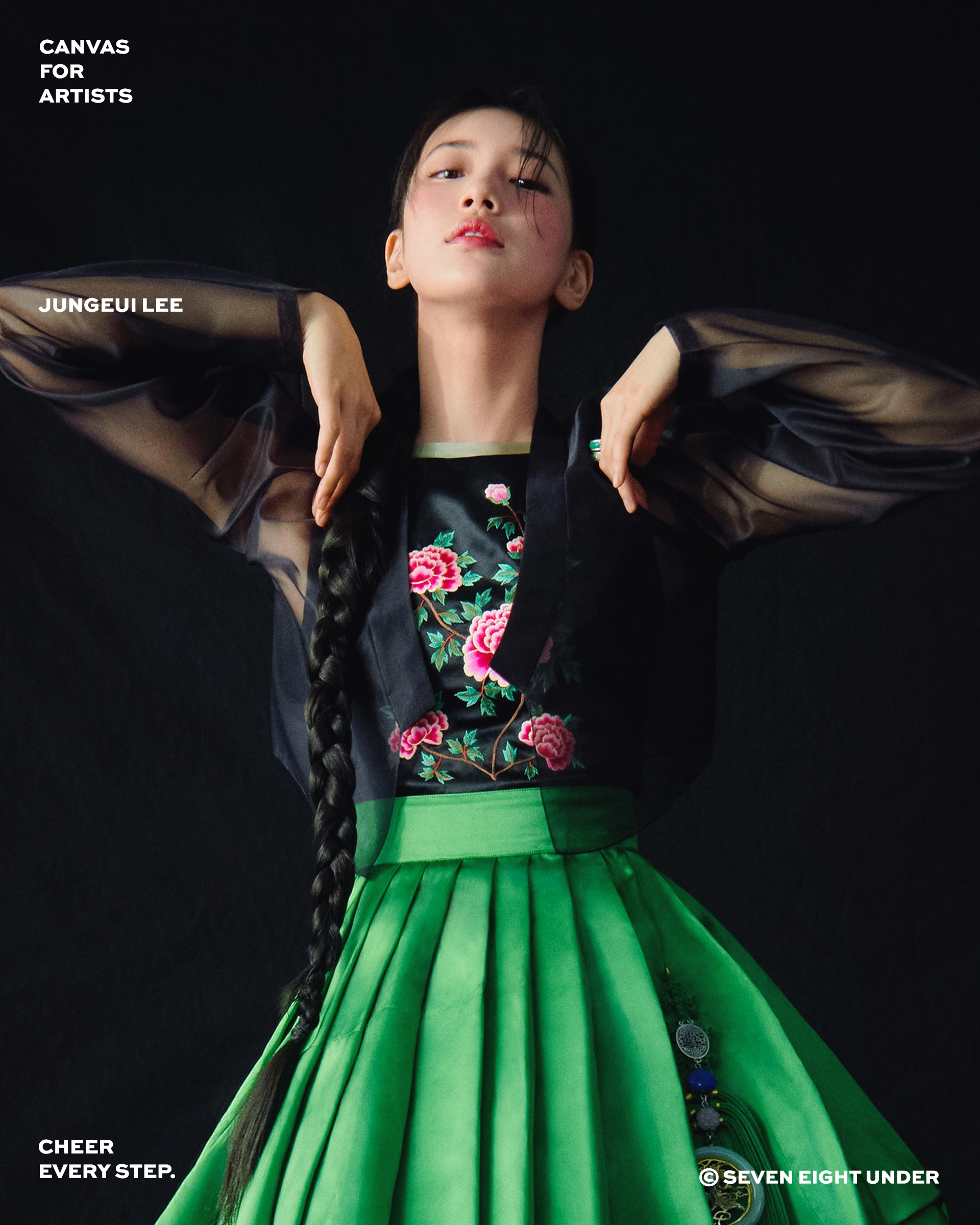
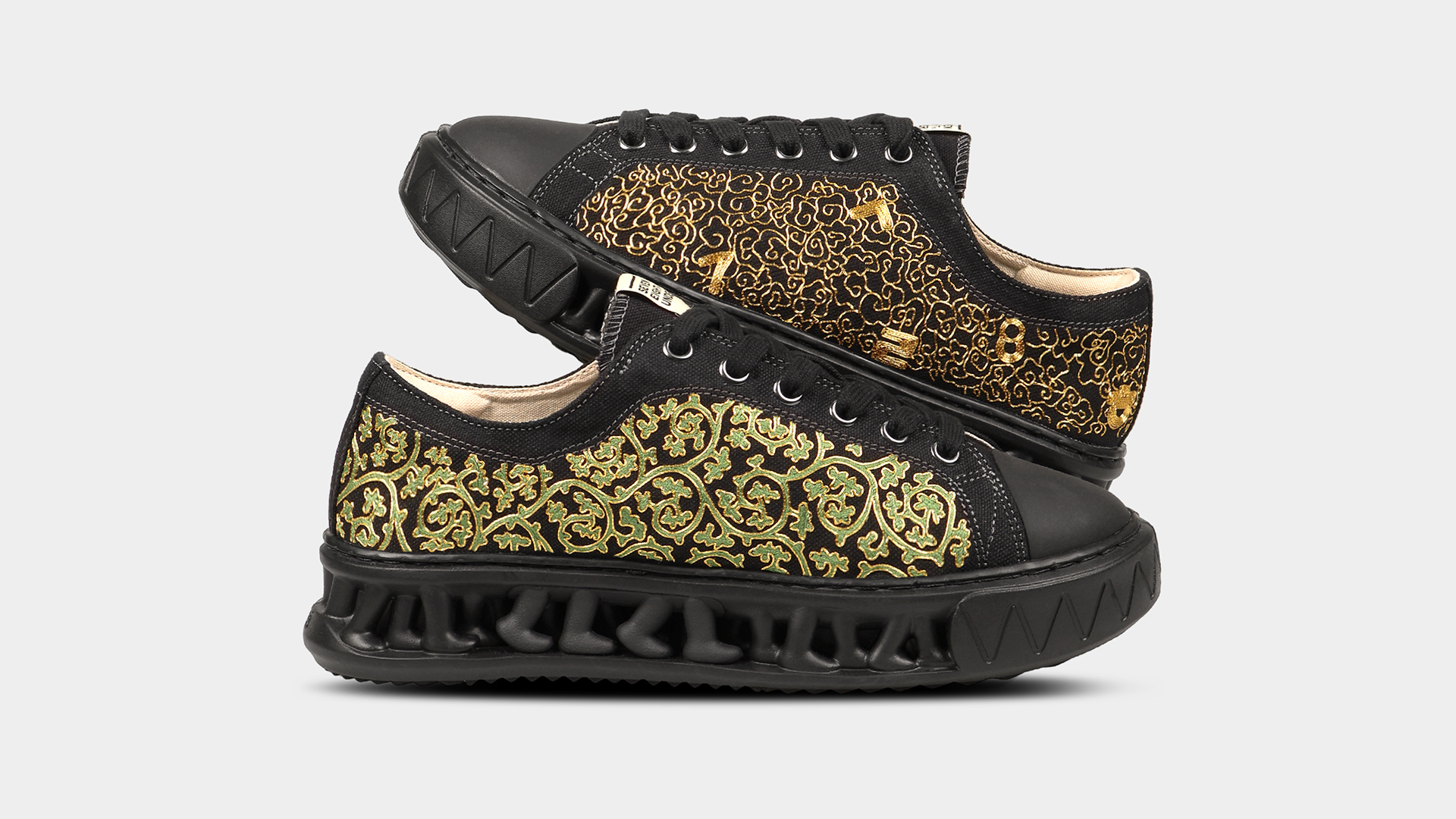
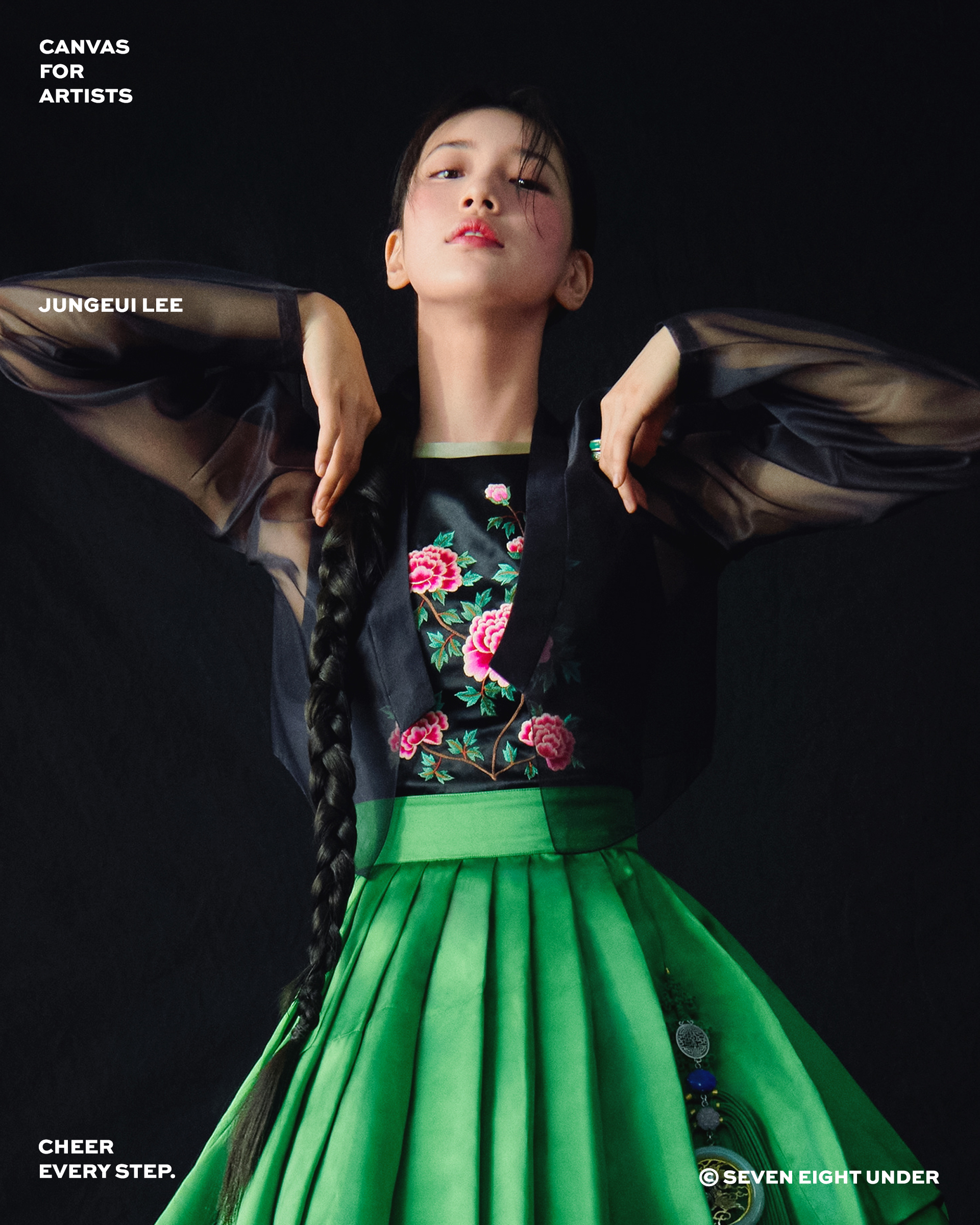
Traditional embroidery was once used for clothing, household items, decorative works, and Buddhist art. Today, however, it is mostly limited to works made for viewing. I worked on a hanbok worn by Suzy through the Hanbok Wave project, and this collaboration brought embroidery to sneakers. I hope these projects show how traditional embroidery can return to everyday life through contemporary fashion.
Q. How was your collaboration with SEVEN EIGHT UNDER?
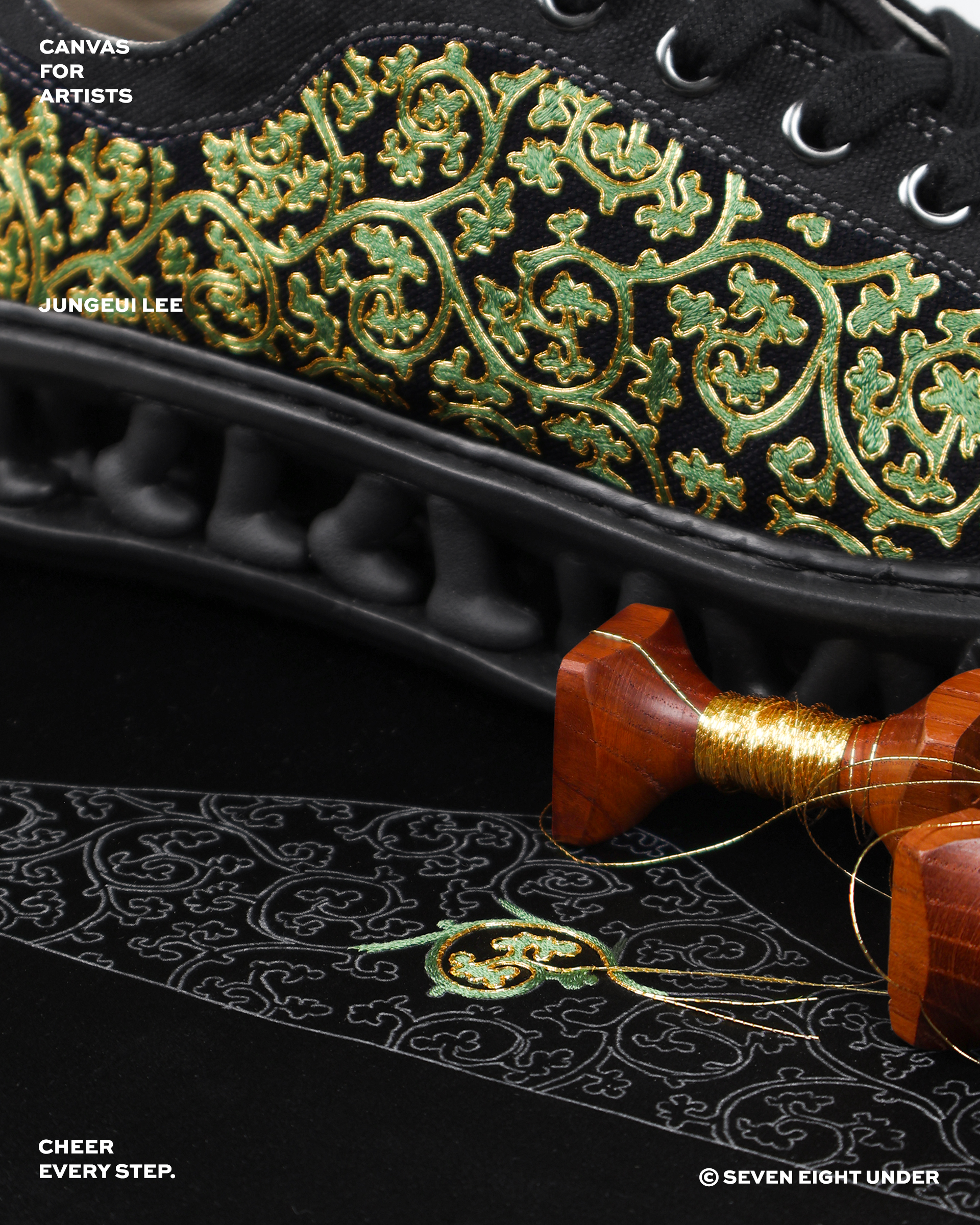
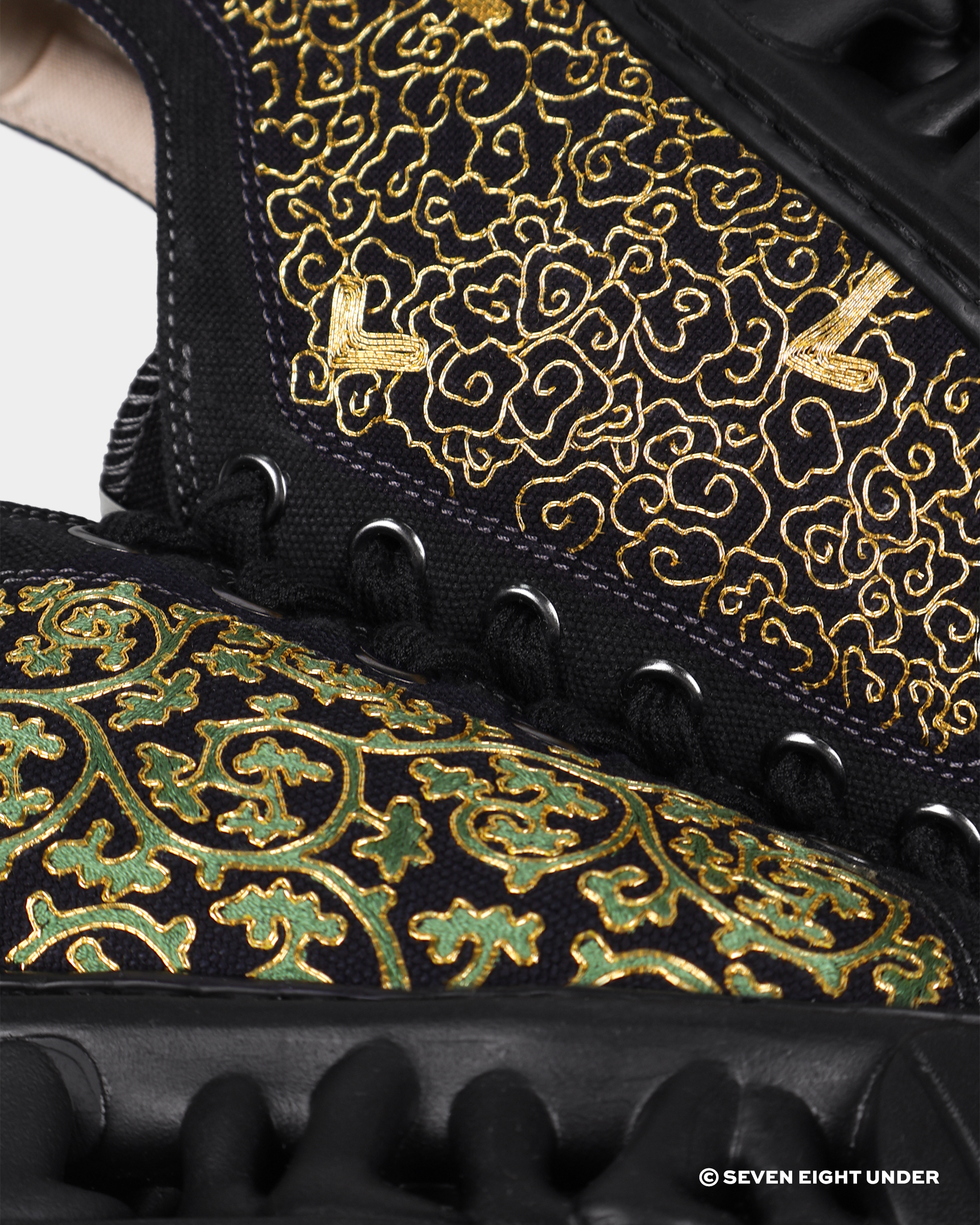
The biggest difference was the material. Silk is thin and easy to control, while sneaker canvas is much thicker. The needle sometimes bounced back or missed the intended point, and pulling silk thread through was difficult. The transferred design also faded easily, so I had to reconstruct and adjust it as I worked. Adapting to these unexpected challenges became a meaningful new experience.
Q. Why did you use different patterns on the left and right shoes?
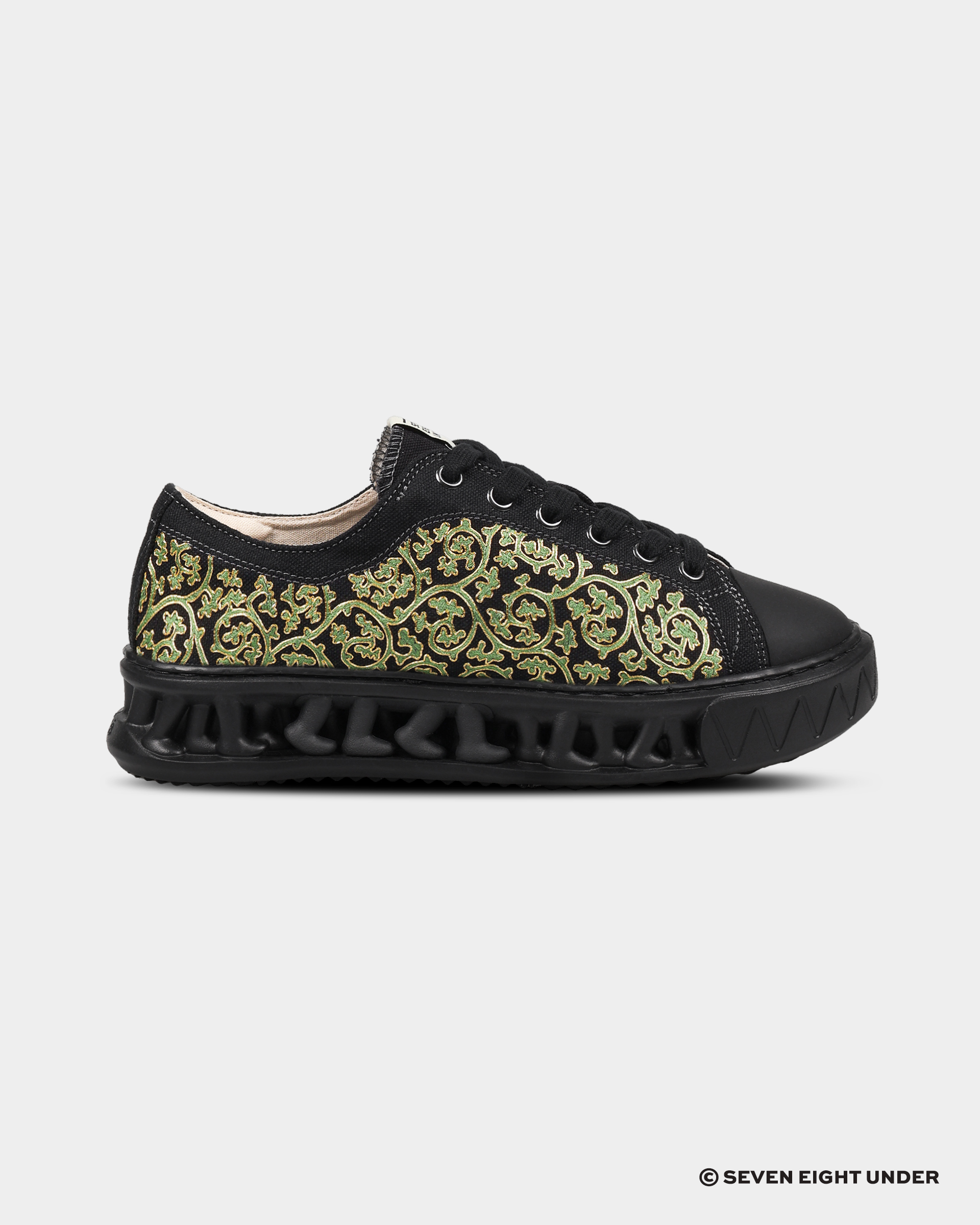
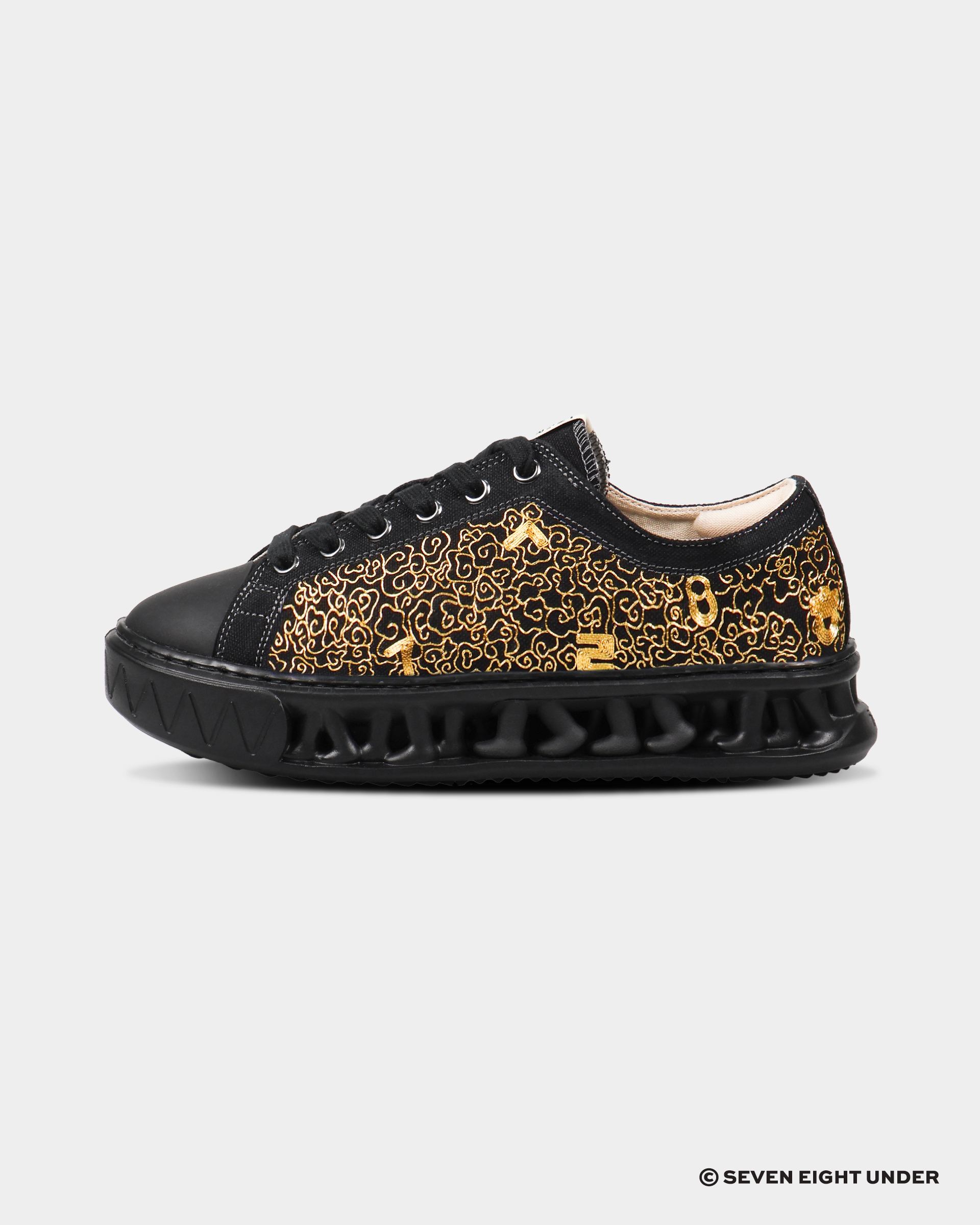
I wanted to move away from conventional symmetry and create more visual movement and individuality. Using two motifs also allowed me to show a wider range of traditional embroidery within one pair.
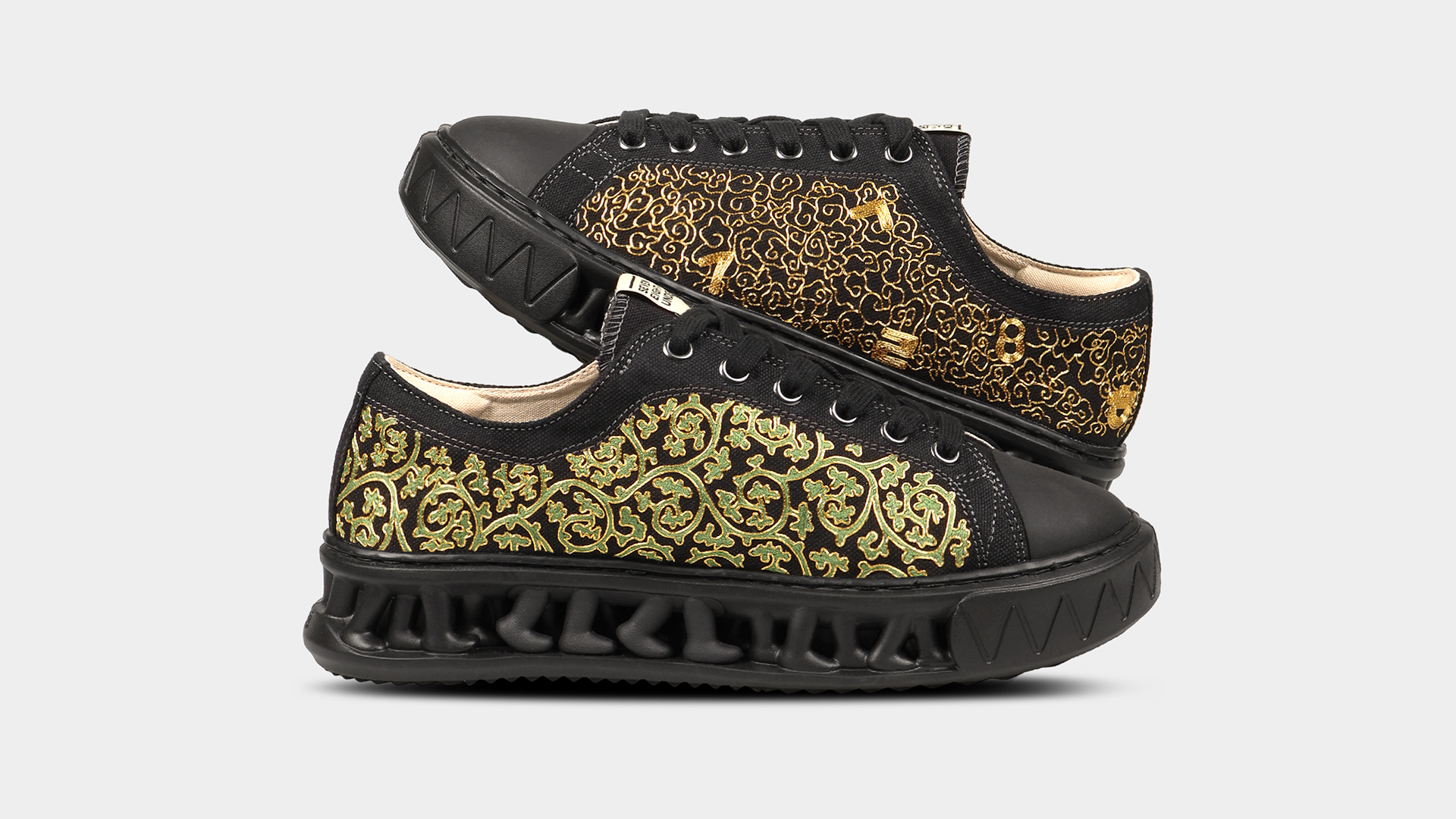
Q. Could you explain the right shoe, <Life Unfolds, Time Walks On>?
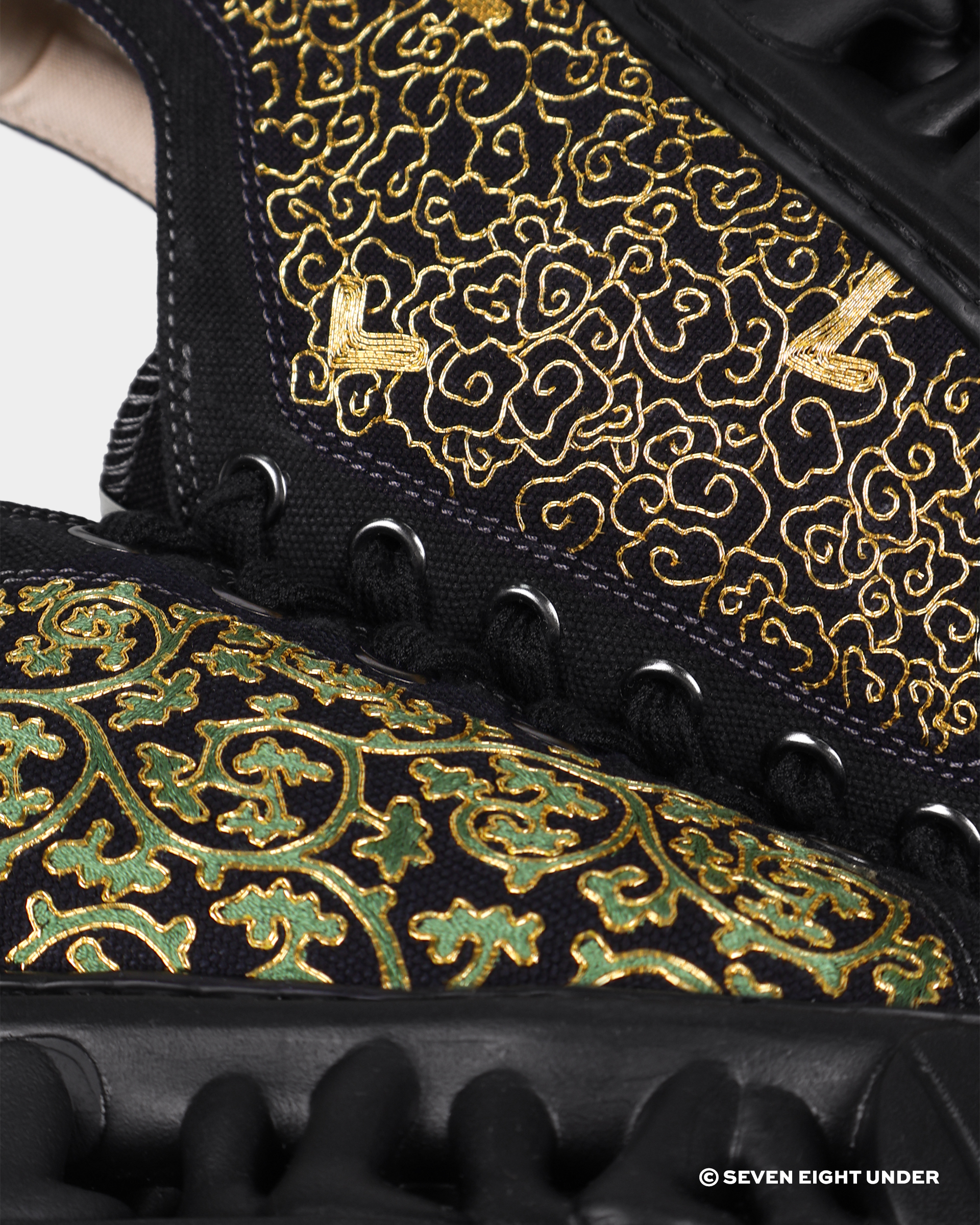
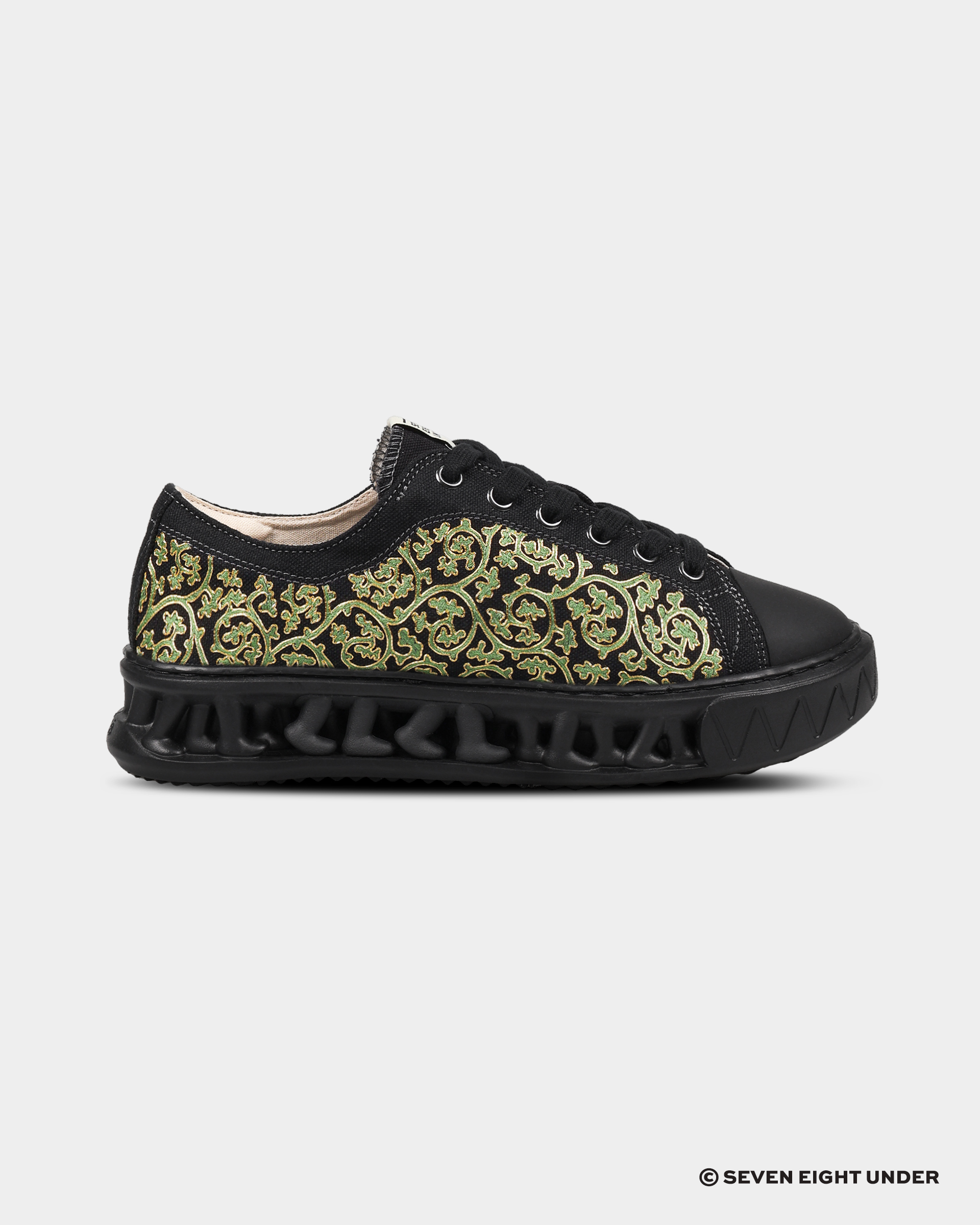
The vine motif was inspired by the lower section of the Hyangwan Incense Burner with an Inscription of Heungwangsa Temple, held by the Leeum Museum of Art. Growing endlessly from one stem, vines symbolize vitality, prosperity, growth, connection, and continuity. I used their flowing form to express how life builds and expands through each daily step. The outline was finished with gold-thread couching for added depth and refinement. The work reflects the rhythm of a life that continues forward, with today’s steps leading into tomorrow.
Q. Could you explain the left shoe, <Rising with Every Auspicious Step>?
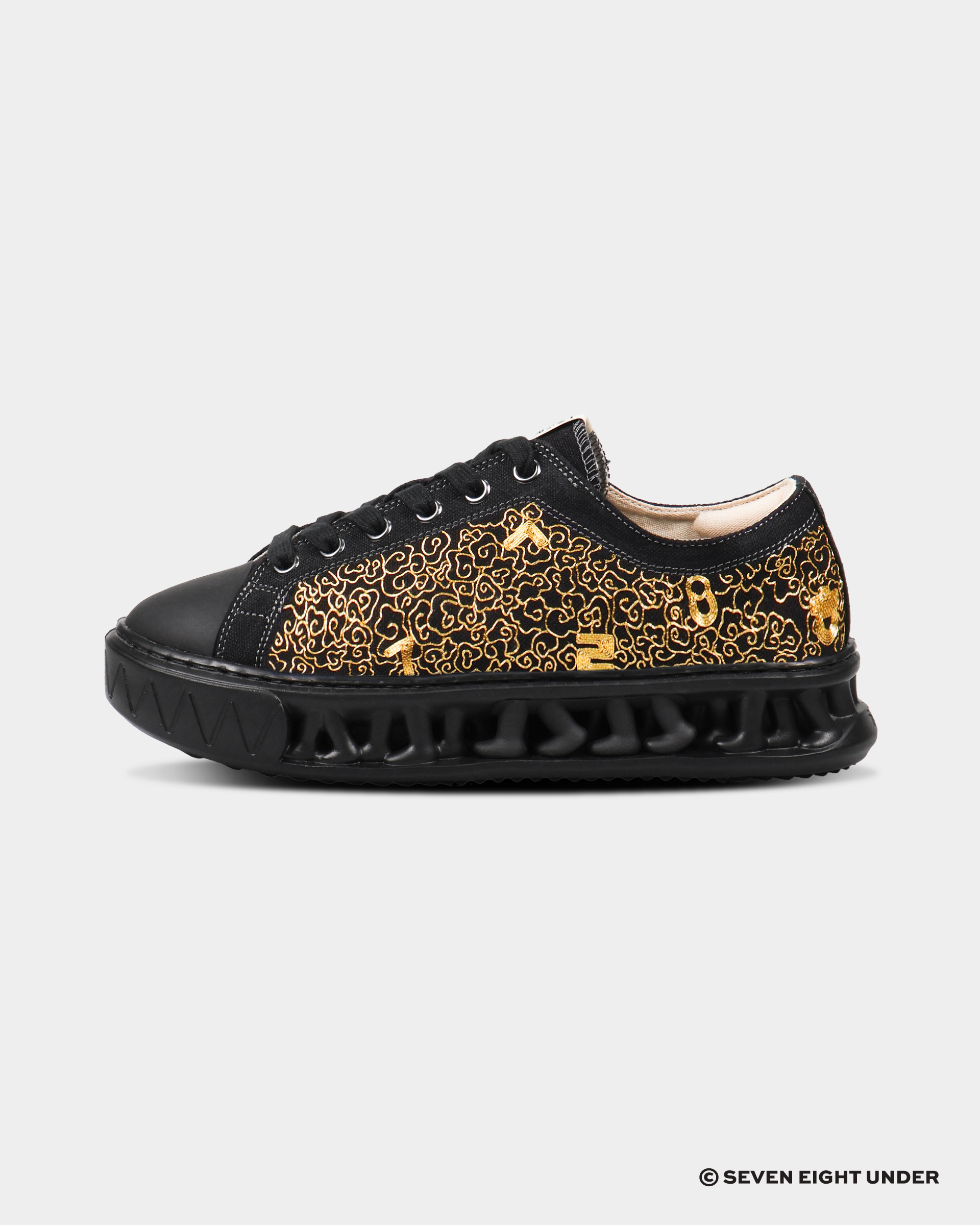
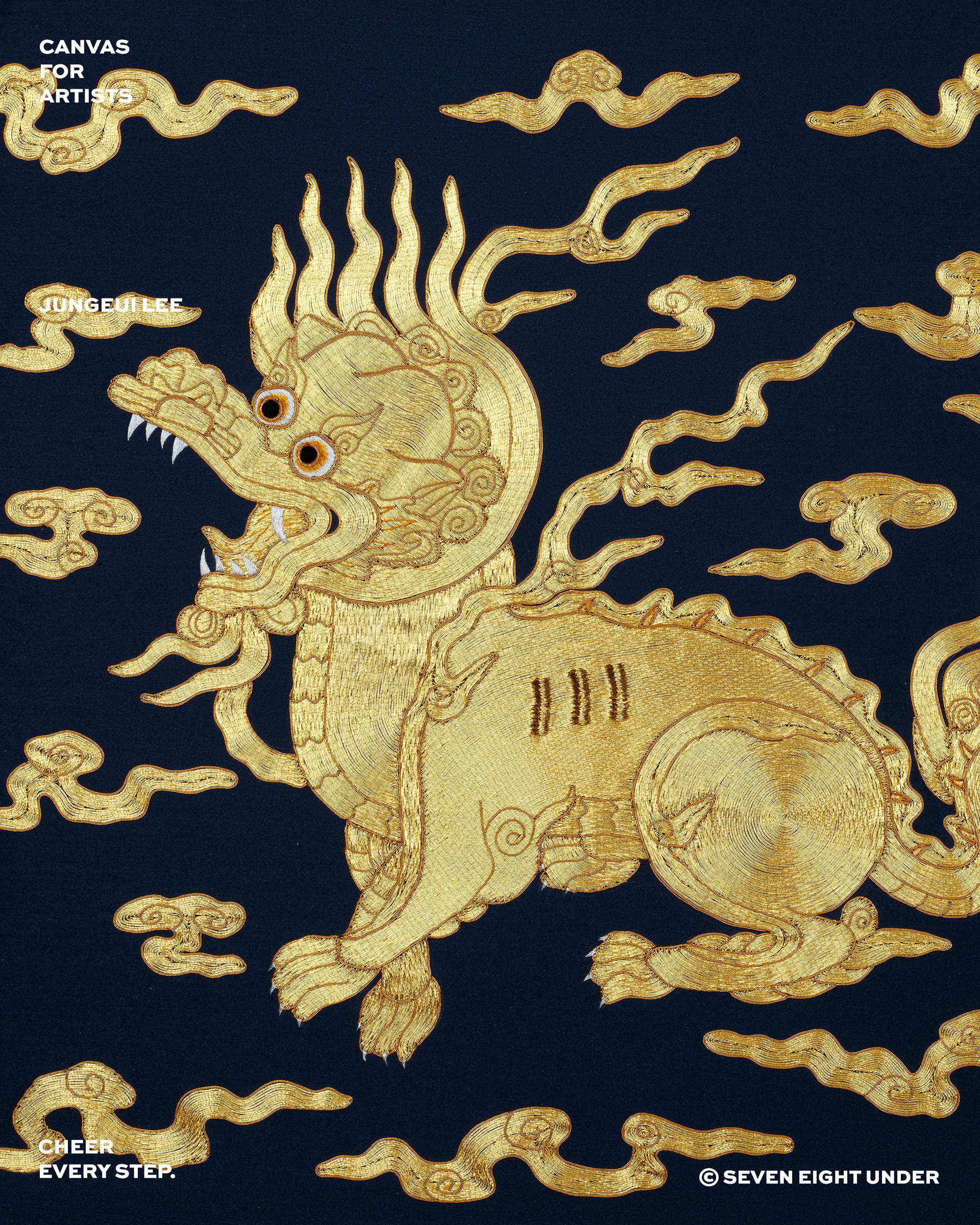
Cloud motifs traditionally symbolize good fortune, protection, ascent, and heavenly energy. As clouds connect the earth and sky, they carry the wish to move forward with positive energy and direction. I embroidered the clouds in gold thread. “78 ㅅㄹㅎ” uses the initial Korean consonants of “78 사랑해,” meaning “I love 78,” and expresses my affection for this collaboration. Here, walking becomes more than movement—it represents stepping onto good energy and growing with every step.
Q. What message did you hope to share through this work?
I wanted to comfort and encourage people living with the anxiety and exhaustion of modern life. Like the vines, I hope their lives continue to grow and extend forward. Like the clouds, I hope positive energy fills both today and tomorrow.
Q. What is your ultimate goal as an artist?
My goal is for traditional embroidery to continue as a living art form rather than remain limited to reproducing the past. I want to preserve its techniques and motifs while adding contemporary stories and my own creative language. To me, embroidery is a cultural record connecting generations. Through residencies, artifact reproduction, design projects, and brand collaborations, I hope to expand its future and introduce Korean traditional embroidery to a wider global audience.
Jungeui Lee
Q. Could you briefly introduce yourself?
Hello, I’m Jungeui Lee, a certified practitioner of Korea’s National Intangible Heritage in embroidery. Drawn to the beauty and history of traditional embroidery, I studied the field through both bachelor’s and master’s programs. The focus required by every stitch is demanding, but the joy of the process led me to become a full-time artist. Today, I work across artifact reproduction, original pieces, garments, and fashion collaborations, expanding embroidery while staying rooted in tradition.
Q. What first led you to traditional embroidery?
I grew up watching my mother embroider. Later, sewing and gyubang craft—traditional Korean needlework—led me to pursue embroidery as my lifelong path. “One stitch at a time” means more than technical precision. It holds the weight of time, the warmth of the hand, and heartfelt care that no machine can replace. That beauty has kept me on this path ever since.
Q. You have described embroidery as a “total art form.” Why do you see it that way?
Embroidery is not simply about filling a design with thread. It requires careful thought about color, brightness, saturation, form, texture, composition, and visual balance. Even one flower petal may contain several layered colors, and its impression changes with every choice. Since embroidery combines technique with artistic judgment, I consider it a total art form.
Q. Your work features chaekgeori, royal motifs, dragons, clouds, butterflies, and fans. How do you choose your subjects?
Artifact reproduction is a foundation of my work, but I also draw from royal decorative paintings, traditional paintings, and folk art. After studying historical references, I reinterpret the colors and compositions through my own sensibility. I am especially drawn to auspicious motifs representing protection, growth, prosperity, and good fortune.
Q. How do you balance faithful reproduction with your own interpretation?
Painting and embroidery can look very different. Even when the original color seems to match the silk thread, it may change completely once stitched. I adjust the brightness, saturation, and palette while respecting the original form and spirit. Since a needle can create details even finer than a brush, each stitch naturally becomes part of my interpretation.
Q. Which works are you most attached to?
The works closest to me are the 2019 Eight-Panel Embroidered Chaekgeori Folding Screen and the 2024 Eight-Panel Embroidered Folding Screen of a Hundred Fans and Butterflies. The first received the Cultural Heritage Administration Award and gave me confidence as an artist. The second received an Encouragement Award, and completing such a large work alone gave me a great sense of achievement. Both continue to push me forward.
Q. You have expanded traditional embroidery into garments and fashion items. Could you tell us about that?
Traditional embroidery was once used for clothing, household items, decorative works, and Buddhist art. Today, however, it is mostly limited to works made for viewing. I worked on a hanbok worn by Suzy through the Hanbok Wave project, and this collaboration brought embroidery to sneakers. I hope these projects show how traditional embroidery can return to everyday life through contemporary fashion.
Q. How was your collaboration with SEVEN EIGHT UNDER?
The biggest difference was the material. Silk is thin and easy to control, while sneaker canvas is much thicker. The needle sometimes bounced back or missed the intended point, and pulling silk thread through was difficult. The transferred design also faded easily, so I had to reconstruct and adjust it as I worked. Adapting to these unexpected challenges became a meaningful new experience.
Q. Why did you use different patterns on the left and right shoes?
I wanted to move away from conventional symmetry and create more visual movement and individuality. Using two motifs also allowed me to show a wider range of traditional embroidery within one pair.
Q. Could you explain the right shoe, <Life Unfolds, Time Walks On>?
The vine motif was inspired by the lower section of the Hyangwan Incense Burner with an Inscription of Heungwangsa Temple, held by the Leeum Museum of Art. Growing endlessly from one stem, vines symbolize vitality, prosperity, growth, connection, and continuity. I used their flowing form to express how life builds and expands through each daily step. The outline was finished with gold-thread couching for added depth and refinement. The work reflects the rhythm of a life that continues forward, with today’s steps leading into tomorrow.
Q. Could you explain the left shoe, <Rising with Every Auspicious Step>?
Cloud motifs traditionally symbolize good fortune, protection, ascent, and heavenly energy. As clouds connect the earth and sky, they carry the wish to move forward with positive energy and direction. I embroidered the clouds in gold thread. “78 ㅅㄹㅎ” uses the initial Korean consonants of “78 사랑해,” meaning “I love 78,” and expresses my affection for this collaboration. Here, walking becomes more than movement—it represents stepping onto good energy and growing with every step.
Q. What message did you hope to share through this work?
I wanted to comfort and encourage people living with the anxiety and exhaustion of modern life. Like the vines, I hope their lives continue to grow and extend forward. Like the clouds, I hope positive energy fills both today and tomorrow.
Q. What is your ultimate goal as an artist?
My goal is for traditional embroidery to continue as a living art form rather than remain limited to reproducing the past. I want to preserve its techniques and motifs while adding contemporary stories and my own creative language. To me, embroidery is a cultural record connecting generations. Through residencies, artifact reproduction, design projects, and brand collaborations, I hope to expand its future and introduce Korean traditional embroidery to a wider global audience.
PF. KAKAO 78under
CONTACT 1877-5784
OFFICE ADDRESS
702, 7F B-DONG, 59, SEONGSUIL-RO 8-GIL, SEONGDONG-GU, SEOUL